Tell us about the job
Takes about a minute. No obligation.
Fuel oil or kerosene heats more occupied homes in Addison County, Vermont than any other fuel, at 44.9% (2020-2024 ACS 5-year). A water heater running on fuel oil or kerosene puts its burner nozzle, heat exchanger, and ignition system through repeated combustion cycles every day the house needs hot water, which is every day of the year regardless of season. In a county where that fuel dominates, a contractor diagnosing a failed or underperforming unit looks at the combustion side of the system first: nozzle wear, heat exchanger scaling, and flue venting condition are where the hours accumulate. What the homeowner chooses as a replacement is also constrained by that fuel, since venting, combustion air, and available equipment types all follow from what the house already burns.
Water heater repairs in housing this old rarely resolve at the surface. Half the homes in Addison County, Vermont were built in 1977 or earlier (2020-2024 ACS 5-year). That history of use shows up inside the tank: sediment packed at the base, an anode rod worn past the point of protecting anything, fittings corroded from decades of mineral contact. A contractor who opens the unit in a house from that era finds conditions that change the scope of the repair on the spot, and the parts a system that old takes are not always in a local supplier's stock.
The Parts of a Water Heater a Contractor Checks First
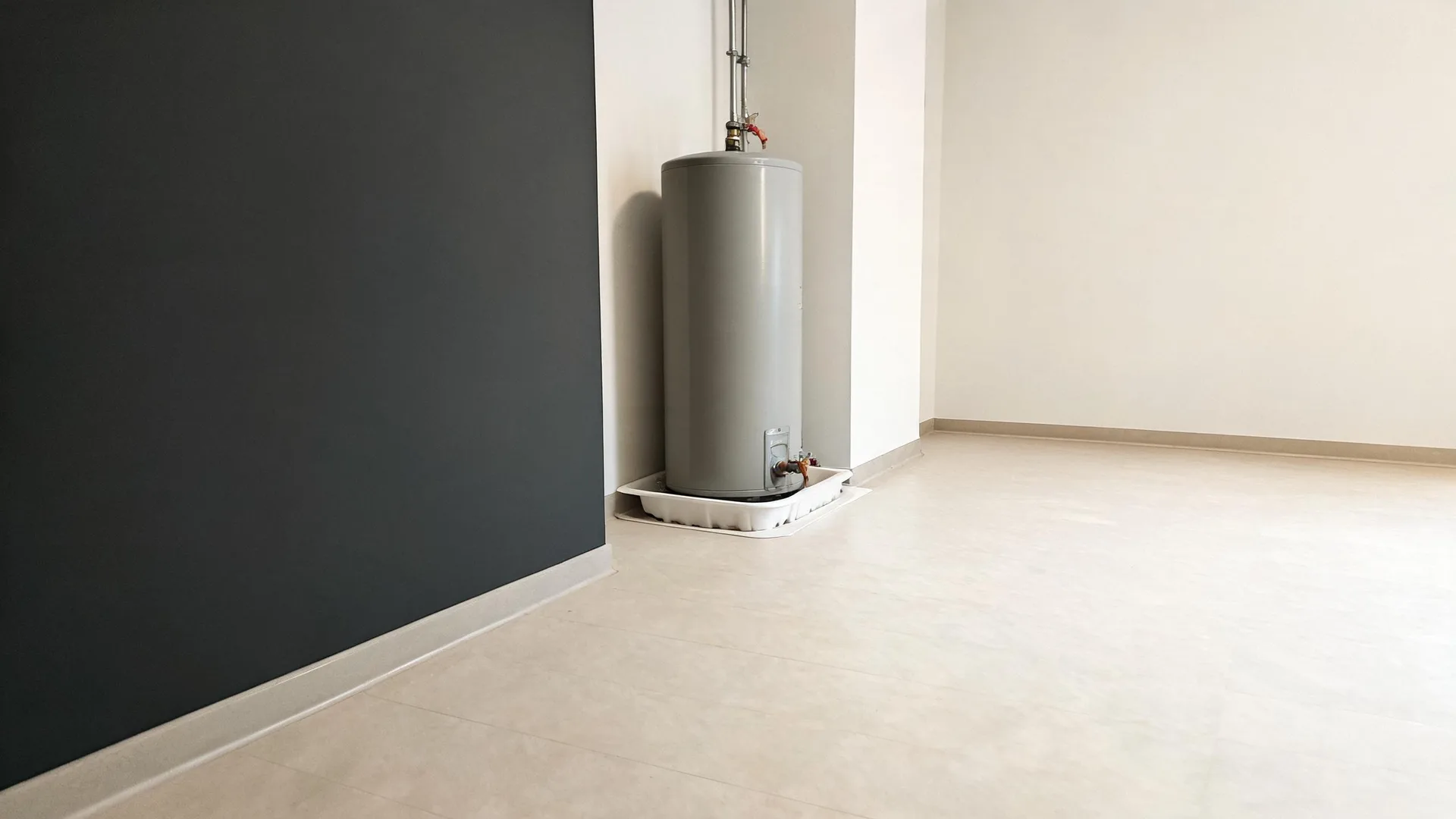
The tank is the piece a homeowner notices first, usually standing in a utility room, basement, or closet. It holds and heats the water your household draws on. When a contractor looks at it, they are checking whether the tank itself is holding pressure, whether sediment has built up at the bottom, and whether the heating element or burner inside is doing its job.
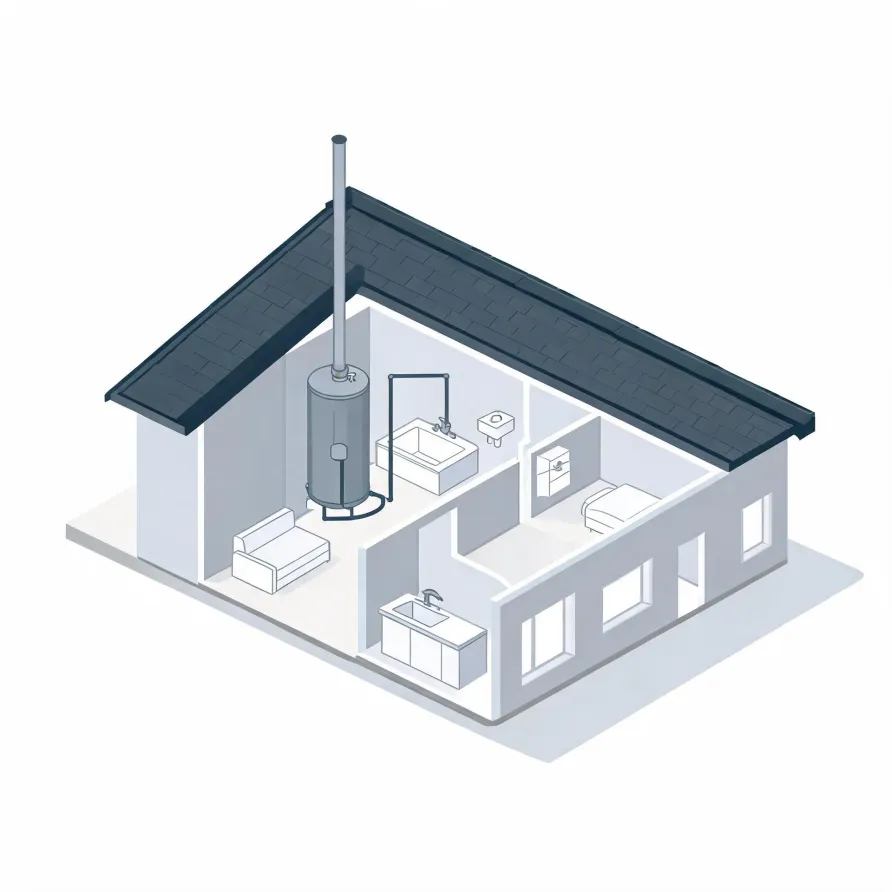
The pressure relief valve sits on the side of the tank and opens automatically if pressure builds past a safe point. The anode rod hangs inside the tank and slows corrosion of the tank walls. The thermostat controls the water temperature, and the supply and outlet pipes carry cold water in and hot water out. Any of these can be the source of a problem.
The drawing shows a typical water heater layout, and a licensed contractor determines what applies to your specific unit and installation.
Find a contractor in Addison CountyAddison County, by the numbers
169 severe weather events were recorded in Addison County, Vermont between 2015 and 2024.
NOAA National Centers for Environmental Information, Storm Events Database, bulk CSV export, events 2015-01-01 through 2024-12-31.Half the homes in Addison County, Vermont were built in 1977 or earlier (2020-2024 ACS 5-year).
U.S. Census Bureau, 2020-2024 American Community Survey 5-Year EstimatesAddison County, Vermont holds 17,617 housing units (2020-2024 ACS 5-year).
U.S. Census Bureau, 2020-2024 American Community Survey 5-Year EstimatesOwners occupy 79.3% of the occupied homes in Addison County, Vermont (2020-2024 ACS 5-year).
U.S. Census Bureau, 2020-2024 American Community Survey 5-Year EstimatesSevere Weather Events in Addison County
Storms, hard freezes, and rapid temperature swings put water heaters under strain that fair-weather conditions never do. How often that pressure arrives in Addison County shapes how hard the equipment works and how quickly wear accumulates.
169 severe weather events, 2015–2024. Source: NOAA National Centers for Environmental Information, Storm Events Database.