Tell us about the job
Takes about a minute. No obligation.
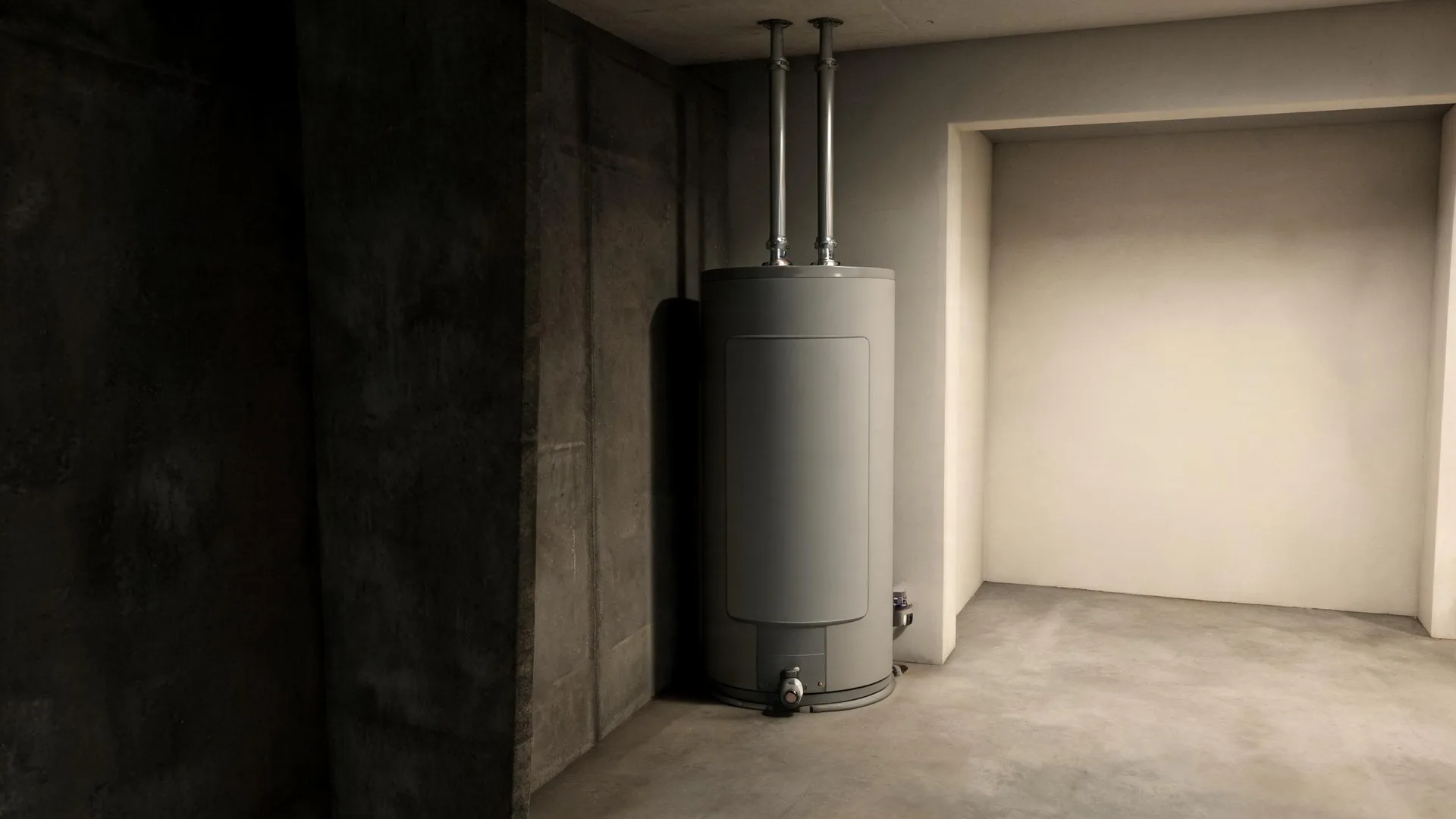
Fuel oil and kerosene systems leave their own signature inside the equipment. Fuel oil or kerosene heats more occupied homes in Windsor County, Vermont than any other fuel, at 45.7% (2020-2024 ACS 5-year). A contractor diagnosing a water heater repair here checks the burner nozzle, the heat exchanger surfaces, and the flue connection before anything else, because combustion-based heating accumulates deposits and byproducts that degrade those components in ways that an electrical or gas system does not produce. Sediment in the tank is a secondary concern. The combustion side is where the wear concentrates.
Water heaters in Windsor County sit inside houses whose plumbing and fuel infrastructure was laid in for something different from what runs through it now. Half the homes in Windsor County, Vermont were built in 1973 or earlier (2020-2024 ACS 5-year). That gap between what was built and what was eventually put in it shows up once a contractor opens the unit: sediment load, anode condition, and connection wear all read differently in a system that has been compensating for the surrounding infrastructure rather than working with it. A part that looks like the problem is often a symptom of how the system has been running, and what it has been running against.
The Parts of a Water Heater a Contractor Checks First
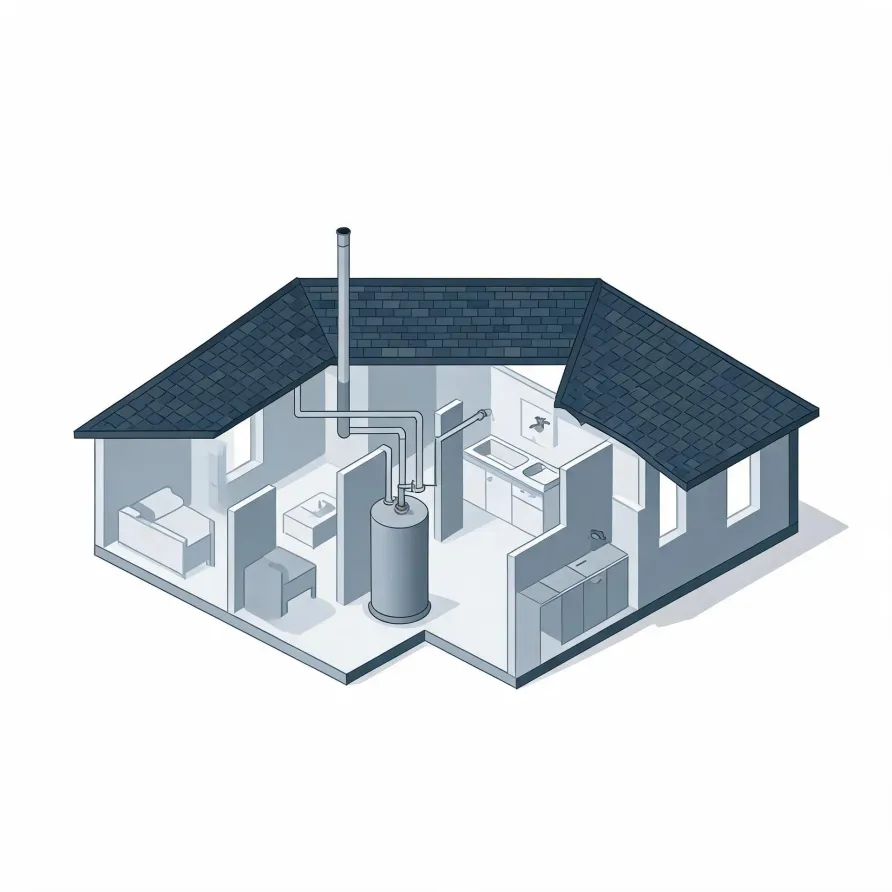
The tank is the piece most homeowners know: a large insulated cylinder, usually in a basement, utility closet, or garage, that holds water at a set temperature until a tap calls for it. The heating element or burner sits inside or beneath the tank and is the first place a contractor looks when water runs cold or fails to heat at all.
The pressure relief valve mounts on the side of the tank and releases if pressure builds too high. The anode rod hangs inside the tank to slow corrosion, and the dip tube directs cold incoming water to the bottom so it heats before rising to the outlet. The thermostat, which controls when heating kicks in, rounds out the pieces a contractor examines when something is off.
The drawing shows a typical layout, and a licensed contractor determines what applies to your specific setup.
Find a contractor in Windsor CountyWindsor County, by the numbers
96 severe weather events were recorded in Windsor County, Vermont between 2015 and 2024.
NOAA National Centers for Environmental Information, Storm Events Database, bulk CSV export, events 2015-01-01 through 2024-12-31.Half the homes in Windsor County, Vermont were built in 1973 or earlier (2020-2024 ACS 5-year).
U.S. Census Bureau, 2020-2024 American Community Survey 5-Year EstimatesWindsor County, Vermont holds 34,846 housing units (2020-2024 ACS 5-year).
U.S. Census Bureau, 2020-2024 American Community Survey 5-Year EstimatesOwners occupy 74.8% of the occupied homes in Windsor County, Vermont (2020-2024 ACS 5-year).
U.S. Census Bureau, 2020-2024 American Community Survey 5-Year EstimatesSevere Weather Events in Windsor County
Vermont weather puts real stress on water heaters: hard freezes, power outages, and temperature swings force equipment to work harder and fail sooner. How often those conditions hit Windsor County shapes what a water heater here actually goes through.
96 severe weather events, 2015–2024. Source: NOAA National Centers for Environmental Information, Storm Events Database.