Tell us about the job
Takes about a minute. No obligation.
Before a contractor can quote a water heater replacement here, they have to establish what the house is already burning and how it breathes. Fuel oil or kerosene heats more occupied homes in Franklin County, Vermont than any other fuel, at 31.1% (2020-2024 ACS 5-year). That majority shapes the install in concrete ways: oil and kerosene systems vent differently from gas, and combustion air requirements follow the fuel, not the tank size. A contractor who skips that step and specs a unit for a generic install risks a venting mismatch that sends combustion gases the wrong direction.
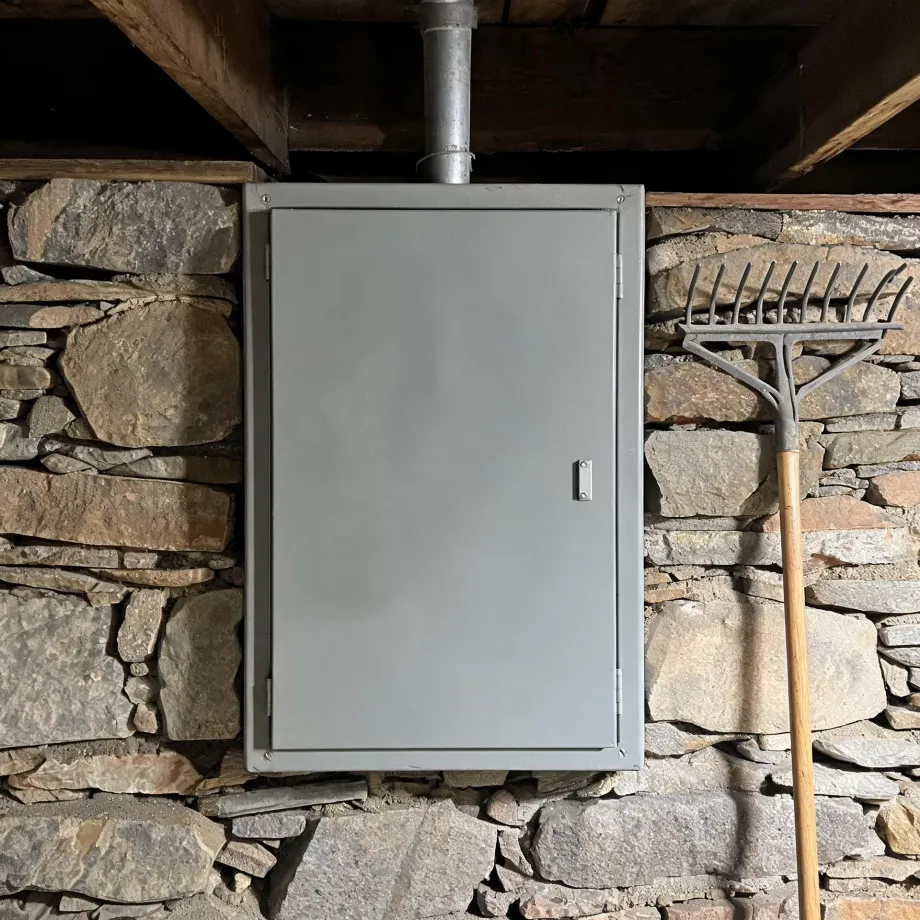
Ductwork and electrical service in older Franklin County housing were designed around equipment that is long gone. What a contractor finds behind the walls often has to be reconciled with what a new water heater actually needs before the installation can proceed. Half the homes in Franklin County, Vermont were built in 1979 or earlier (2020-2024 ACS 5-year). That means the house itself, not the unit being swapped in, is where a licensed contractor spends time assessing: whether existing runs can handle the demand, and whether the panel has room for the new load.
What Gets Installed With a New Water Heater
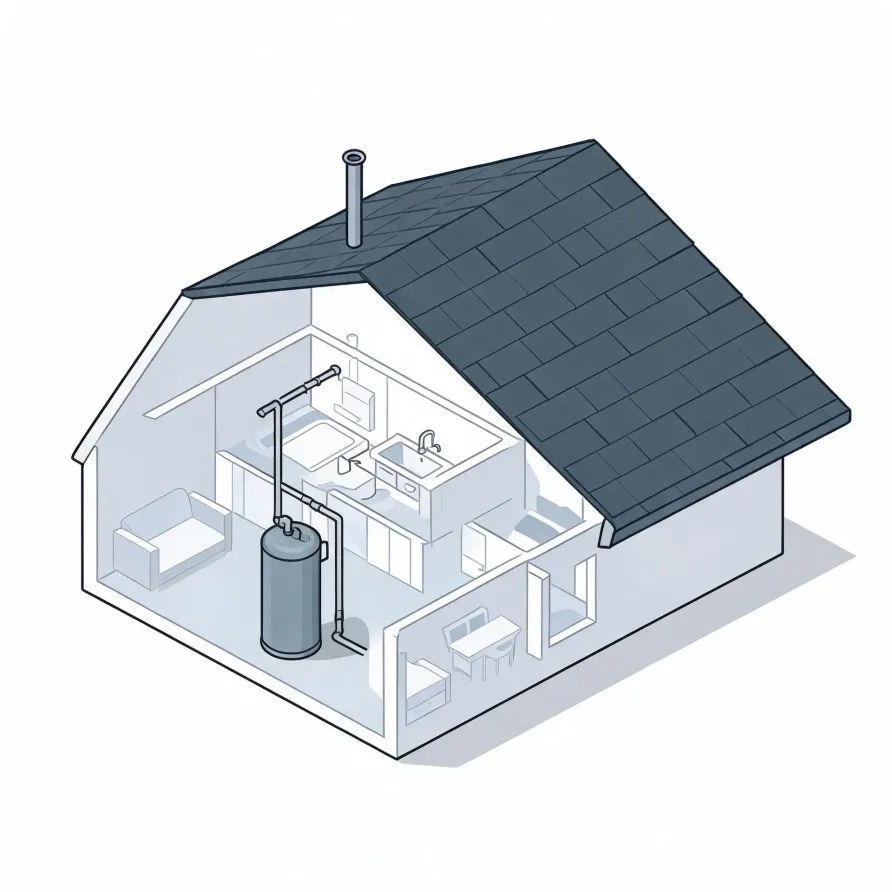
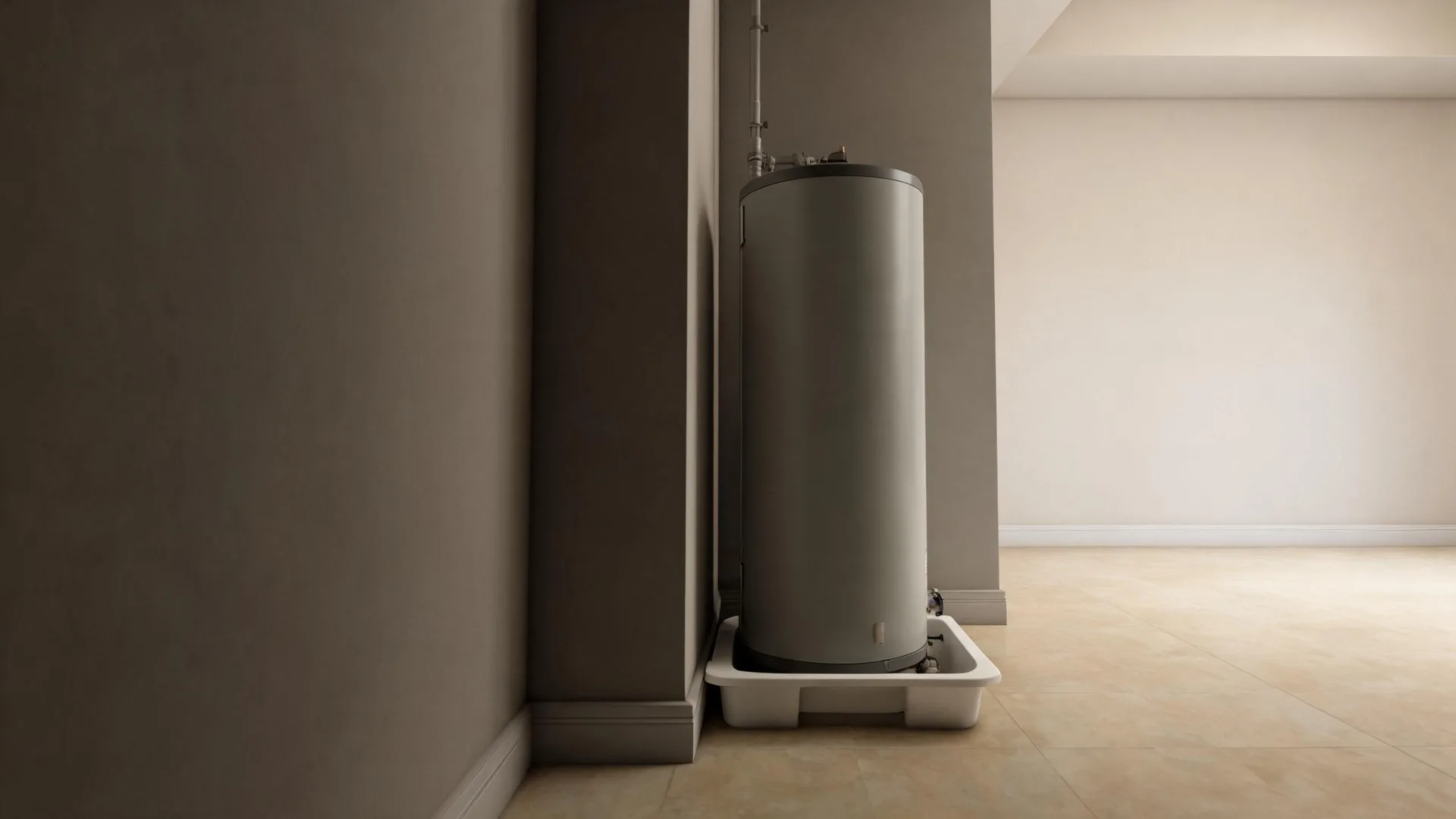
The storage tank is the piece most homeowners recognize. It sits in a utility room, basement, or closet and holds a supply of water that a connected heating element or burner keeps at a set temperature. A pressure relief valve mounts directly to the tank and opens automatically if pressure inside climbs too high.
A cold-water inlet pipe feeds the tank from the house supply line, and a hot-water outlet pipe carries heated water to the fixtures throughout the home. An anode rod threads into the top of the tank and sits submerged inside it, slowing corrosion of the tank walls over time.
The drawing shows a representative layout, and a licensed contractor determines what fits the specific setup in your home.
Find a contractor in Franklin CountyFranklin County, by the numbers
128 severe weather events were recorded in Franklin County, Vermont between 2015 and 2024.
NOAA National Centers for Environmental Information, Storm Events Database, bulk CSV export, events 2015-01-01 through 2024-12-31.Half the homes in Franklin County, Vermont were built in 1979 or earlier (2020-2024 ACS 5-year).
U.S. Census Bureau, 2020-2024 American Community Survey 5-Year EstimatesFranklin County, Vermont holds 23,019 housing units (2020-2024 ACS 5-year).
U.S. Census Bureau, 2020-2024 American Community Survey 5-Year EstimatesOwners occupy 77.4% of the occupied homes in Franklin County, Vermont (2020-2024 ACS 5-year).
U.S. Census Bureau, 2020-2024 American Community Survey 5-Year EstimatesSevere Weather Events in Franklin County
Water heaters work harder when the weather outside is rough, and Vermont winters put real strain on equipment that was sized or installed without the local climate in mind. What happens in Franklin County shapes how a water heater is specified, installed, and how long it holds up.
128 severe weather events, 2015–2024. Source: NOAA National Centers for Environmental Information, Storm Events Database.