Get in touch with a local installer about a new water heater.
A water heater in Vermont usually lasts somewhere between 8 and 12 years, less if it sits on well water with a lot of sediment, more if it gets flushed now and then. Tank units tend to go first at the bottom, where years of heat and mineral buildup wear through the steel. Once a tank starts leaking, that's the end of it. There's no patching a rusted-out tank.
Power costs more here than in most of the country, so the unit heating your water is one of the bigger draws on your electric bill, especially with oil handling the rest of the heating load. When a water heater starts to fail, a lot of homeowners find out from a utility bill that climbed before they noticed the water running lukewarm.
If yours is getting old, or already failing, the choice isn't just whether to replace it. It's what to replace it with, and who installs it. A gas tank, an electric tank, a heat pump water heater, a tankless unit, each one fits a different setup, and what works in your house depends on your gas line, your electrical panel, your basement, things only someone standing in front of them can judge.
That's the kind of call worth leaving to someone who installs these year-round in Vermont homes, who's seen what fails first in houses built the way yours probably was, and who can tell you straight what fits your situation instead of what's easiest to sell. Once you request a match, you're connected with one contractor local to you, not a handful competing for your number. They'll reach out and walk through what you've got and what your options actually are.
The rest of this page gets into the specifics of how long these units run and what shortens that. But if you already know yours needs looking at, that part can wait.
A water heater in Vermont typically runs 8 to 12 years before it needs replacing, tank units especially. Most homes here heat with oil, so the water heater is often working on its own, separate from the furnace, which means its tank is doing the full job of heating water day in and day out without help from a boiler loop. That steady demand wears on the tank over time, especially at the bottom seam where sediment collects and heat works hardest. Once a unit passes the 10 year mark, a slow leak or a failing heating element becomes more likely, and replacement starts to make more sense than another repair. Vermont winters mean the tank is working harder for longer stretches each year, which adds up over a decade. If yours came with the house, checking the age on the label tells you more than guessing from how it looks.
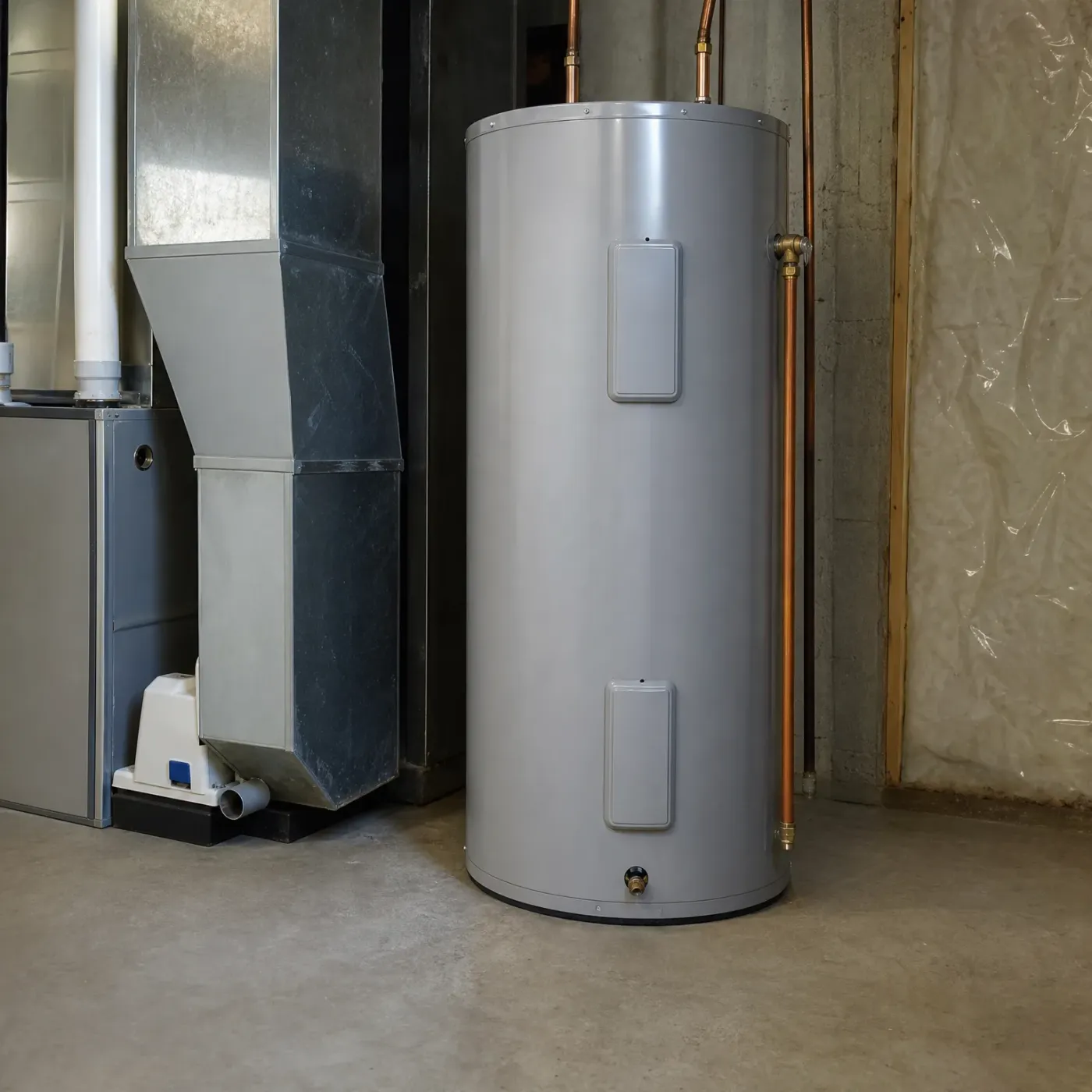
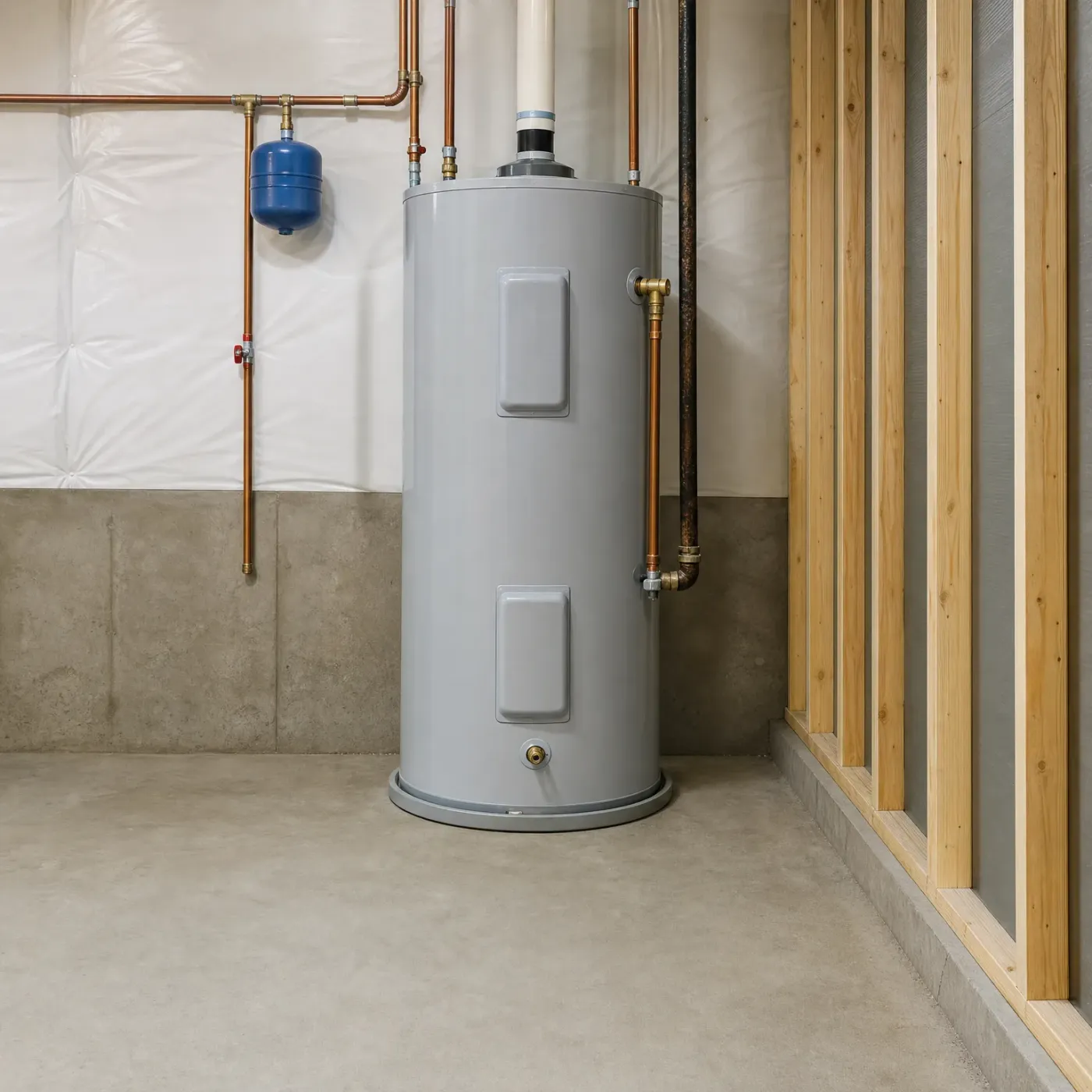
A water heater like this one, with clean copper lines and no rust at the fittings, is still doing its job the way it did on day one.
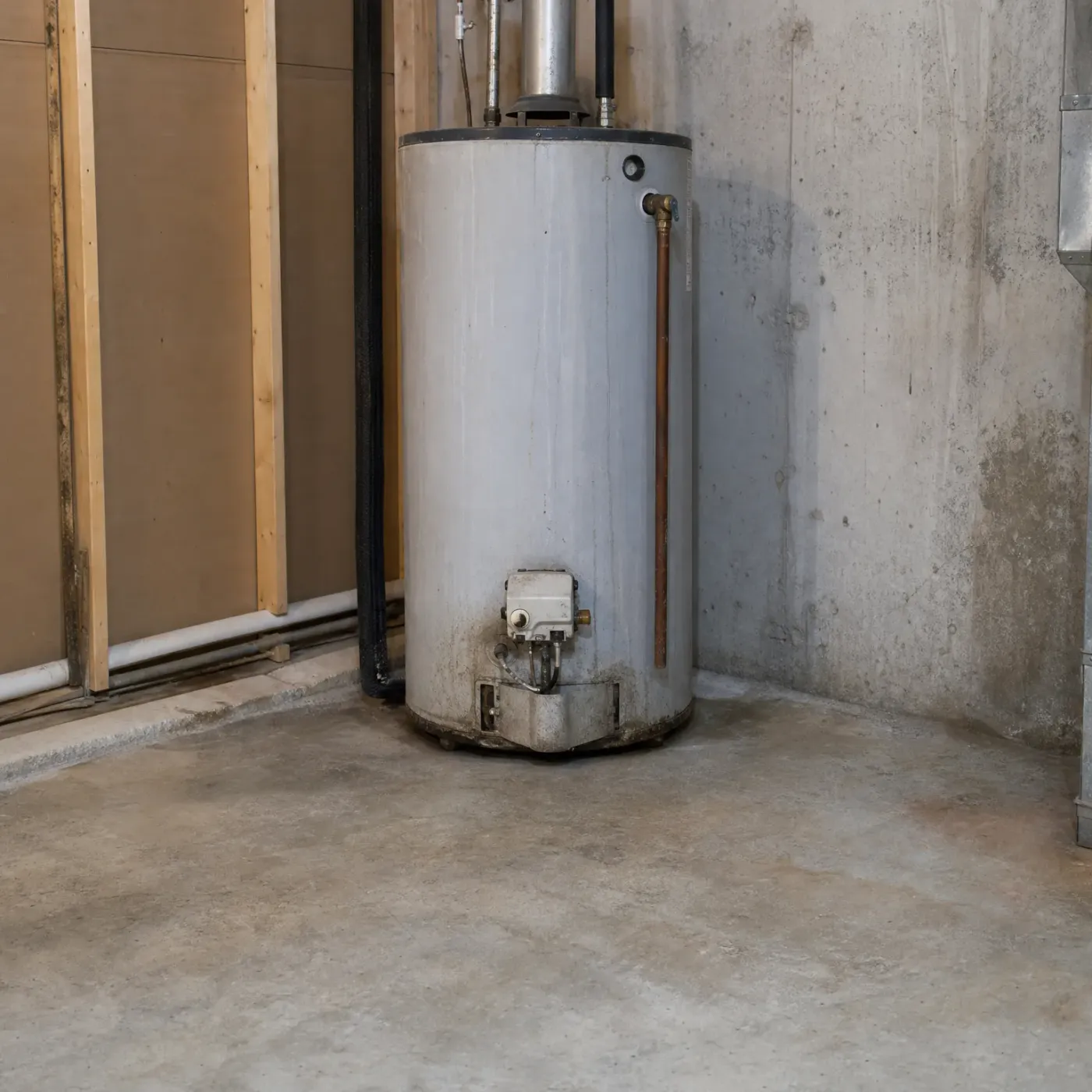
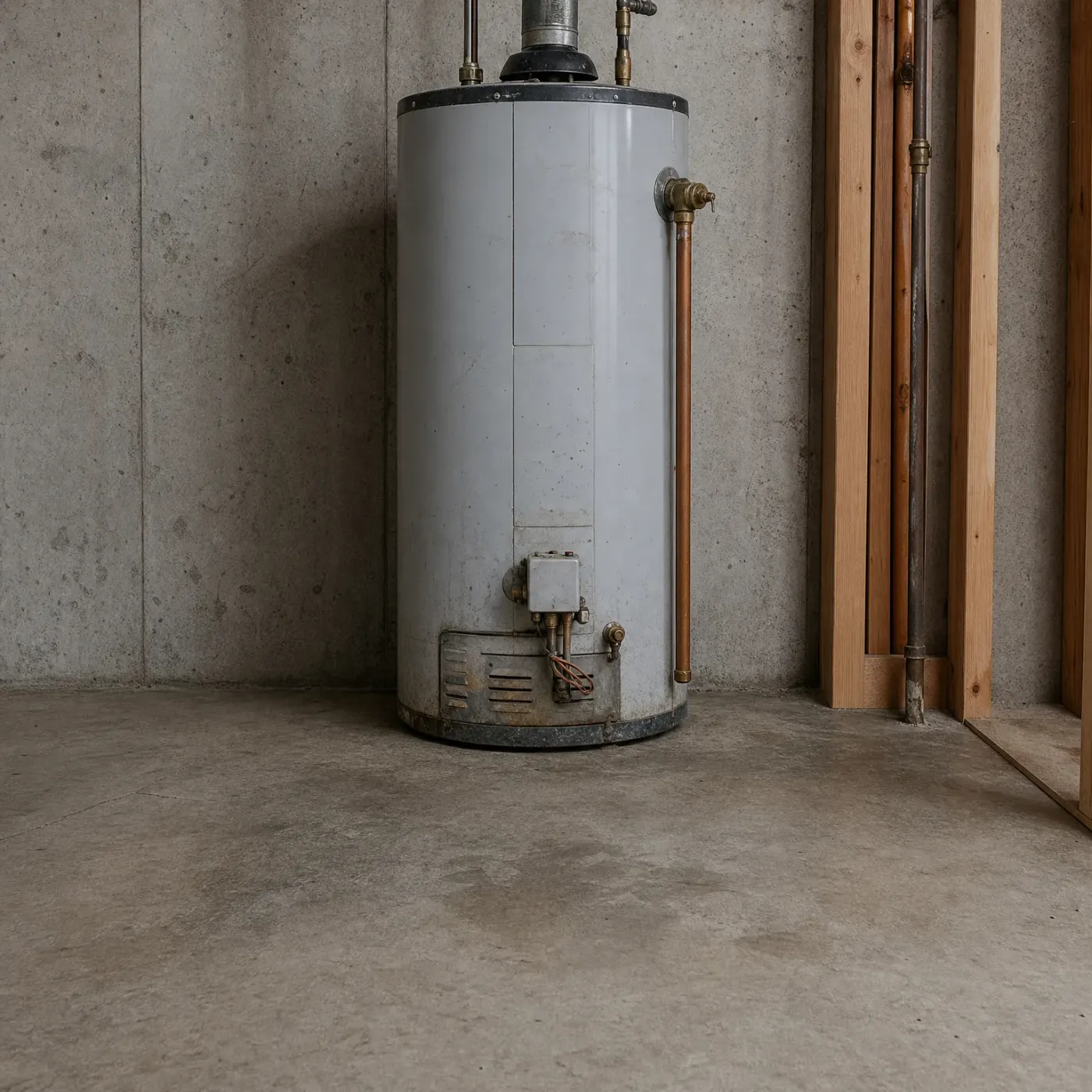
Rust at the base, scale crusted on the burner, a flue pipe gone dark like this one shows a tank near the end of its 8 to 12 years.
Inside the tank, the water heater is fighting a slow battle against its own water. Sediment drifts down and settles on the bottom, and once it's there, the burner underneath has to push harder and longer to get heat through it to the water above. That extra work is what ages a tank before its time. There's a rod inside, the anode rod, that's built to corrode first so the steel tank doesn't. It does that job quietly for years, then it's gone, and after that the tank itself starts to rust. On well water, which a lot of Vermont homes run on, the mineral content tends to be higher than what a municipal line carries, so the sediment layer builds up faster. Draining a few gallons now and then keeps that layer loose instead of packed hard against the burner. Checking the anode rod and replacing it before it's fully spent is the other half of it. Once rust shows up at the fittings or the bottom seam starts leaking, neither of those fixes anything anymore.
What's Actually Happening Inside the Tank
Sediment settles at the bottom of the tank and the burner has to fire longer to heat through it, which wears the tank from the inside.
A anode rod hangs inside the tank and corrodes on purpose so the steel around it doesn't, and once it's used up the tank starts rusting.
Vermont's well water often carries more minerals than city water, so that sediment layer builds faster than it would on a municipal line.
Draining a few gallons from the tank every few months keeps sediment from packing down hard enough to insulate the burner from the water above it.
The anode rod can be pulled and checked, and swapping it out before it's gone adds years the tank wouldn't otherwise get.
A tank that's rusting at the fittings or leaking from the bottom seam is past the point where flushing or a new anode rod helps.
Your request goes to one pro, not a list of companies.
Sending the form costs nothing.
What well water does to a tank
A lot of homes in Vermont run on well water, and well water usually carries more sediment and dissolved minerals than a municipal supply does. That sediment settles in the tank and builds up on the burner and the bottom plate. The heater has to work harder and longer to push heat through that layer, and the steel underneath takes the wear. A tank on well water can fall toward the 8 year end of the range even with decent care, where the same unit on treated city water might stretch past 10. Flushing the tank once a year slows this down but doesn't stop it.
Why oil heat changes the math
Since most houses here heat with oil, the water heater usually isn't tied into the furnace. It runs alone, on its own burner or its own electric elements, heating every gallon from the ground up without any help from a boiler loop. That means the tank sees more cycles over a year than it would in a home where a boiler shares the load. More cycles means more expansion and contraction on the tank's seams and more hours on the burner assembly. It's one reason a unit running alone tends to show wear closer to the 8 year mark.
38.5% of homes statewide heat with fuel oil
With almost 4 in 10 Vermont homes heating with oil, your water heater is most likely its own separate unit, not a side function of the furnace. It runs on its own schedule, which means its tank, burner and anode rod wear out on their own timeline too, regardless of how the furnace is doing.
ACS 2020-2024 5-year B25040
Still on schedule
This one is electric, so there's no burner or flue to foul, and the copper lines are clean with no green crust at the joints. The blue expansion tank mounted on the pipework is doing its job absorbing pressure, not a sign of trouble.
Past its years
Rust has worked into the lower section around the burner, and grime has built up where it shouldn't be. A gas tank in this shape has likely already passed its 8 to 12 years, and the corrosion at the base usually means a leak isn't far off.
8 to 12 years, then it's time
That's the span to expect from a water heater in Vermont. Well water and sediment push a tank toward the early end. A flushed tank, or an electric unit with no burner to foul, can run toward the later end or past it. Once you see rust at the base or a flue gone dark, or the tank is just old enough, replacing it is the right call rather than waiting for it to fail on its own schedule.
When you're ready, you'll be matched with one contractor, not several competing for the job, and that contractor will reach out to you directly. Look for someone local, licensed, who installs water heaters in homes like yours all year, oil-heated or not, municipal water or well. That's someone who's seen what tends to go first in a Vermont home and can size and set up the replacement to suit your water and your setup, not a generic install.
Water Heater Installation
A pro who works on water heaters
Step 1 of 3: Equipment
Describe your water heater job, and a local pro who handles it gets in touch.
Say what's going on with your water heater, and a pro who works on them reaches out.
Send the form and the search for an installer is over.
Send the form and stop researching installers for the new water heater.
Skip the round of in-home estimates for a new water heater.
Describe the project once instead of to every installer.
The pro who reaches out is licensed in Vermont.
Only one pro gets your request, so you hear from one company.